

Is the card that you are using to run your business working as hard as you and your crew? For most construction businesses, whether a residential GC, remodeler, or trade contractor, the best card might not be the one that gives you points to buy a flight to your nephew’s wedding. General-purpose cards earn rewards and are great for small businesses, but many people don’t realize the power of a card purpose-built for a single industry.
What makes a card great for a construction business?
The right card should do more than earn rewards; it should make running the business easier. Look for:
- Cards for the whole crew, with limits. Put a card in every crew member's pocket while keeping control over what they buy and where they buy it.
- Receipt capture in the field. Receipts should be organized the moment they're created, not crumpled in a truck cup holder, this is doubly true if you're running cost-plus jobs.
- Job costing built in. "Hardware store: $575" doesn't tell you much. "$575 for 5 gal. of acrylic latex paint on the Johnson remodel" makes expense tracking a whole lot easier.
- Rewards without the hoops. Flat cash back beats rotating categories you have to babysit.
- Accounting sync. QuickBooks integration means your bookkeeper isn't re-keying every Home Depot run.
The best business card for contractors:
Chase Ink Business Cash — Best for office-heavy spending
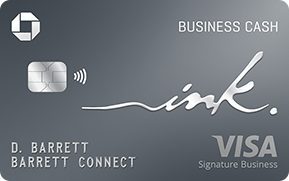
- Pros: 5% back on office supplies, internet, and phone (on the first $25,000 per year); 2% on gas and restaurants (same cap); no annual fee; strong sign-up bonus
- Cons: Bonus categories don't match where a builder actually spends; requires good personal credit and a personal guarantee
American Express Business Platinum — Best for large GCs who travel
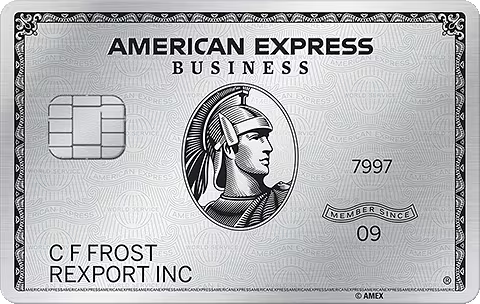
- Pros: 2X points at U.S. construction material and hardware suppliers; premium travel perks
- Cons: $895 annual fee; the points game works best for bigger operations; personal guarantee required
Capital One Spark Cash — Best for simple flat-rate rewards

- Pros: Flat 1.5% on everything with no annual fee (or 2% with the $150/year Spark Cash Plus); easy to understand; relatively accessible approval
- Cons: Most Spark cards report activity to your personal credit; no construction-specific tracking
Home Depot / Lowe's commercial cards — Best for single-supplier discounts
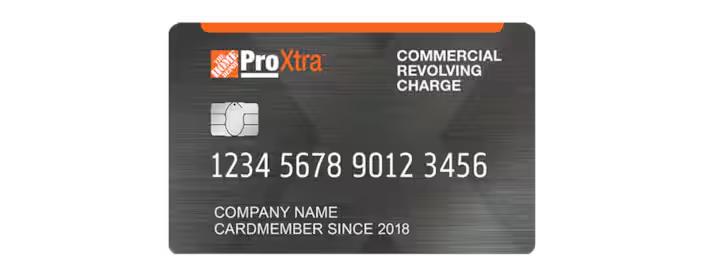
- Pros: Store perks, payment terms; many builders keep one of these alongside a primary card
- Cons: Only works at one store; requires a personal guarantee
Ramp — Best for office-based companies with finance teams

- Pros: Free software, strong spending controls, automated receipt matching, QuickBooks sync
- Cons: Built for generic business spend, no job costing by project and cost code
Beam Card — Best overall for contractors, remodelers, and tradespeople
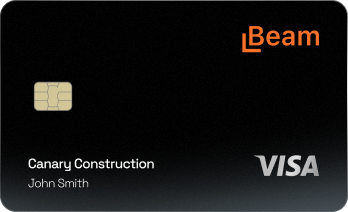
- Pros: 1% cash back, crew cards with custom limits on spend and retailer, automatic receipt capture, every purchase tagged to a job and synced to QuickBooks
- Cons: Rewards rate won't beat a premium points card for a large company that travels; it's a charge card, so the balance is paid in full each month (more on that below)
How the Beam Card Works
The Beam Card isn't a traditional credit card; it's a charge card. Your balance is automatically paid in full every 30 days, so you can't carry a balance, and it doesn't accrue interest. There's also no credit check, and your credit limit can be established in as little as 24 hours. Instead of pulling your personal credit score, how much you can spend is based on the health of your business bank account, considering factors like your total balance and how much money has moved in and out over the past few months. For most contractors, that means a usable limit, no personal guarantee, and no risk of revolving debt eating your margins between jobs.
How to choose
- If most of your spend is at one big-box store → keep a store card in your wallet
- If you spend a lot of time on planes → Chase or Amex points are great
- If you have a finance team and are not worried about job costing→ Ramp is a strong choice
- If you want every purchase tied to a job, receipts captured in the field, and approval without a personal credit pull → Beam Card is the way to go
Bottom line: For the construction businesses, the best card is the one that connects spending to the job, and for many general contractors, remodelers, and tradespeople, that's the Beam Card.
